INSIGHTS FROM THE FIELD

Articles & Technical Guidance

Practical articles on high-purity water, solvent systems, system planning, and best practices written by engineers and informed by real installations.

Tagline

Lorem ipsum dolor sit amet

Lorem ipsum dolor sit amet, consectetur adipiscing elit, sed do eiusmod tempor incididunt.

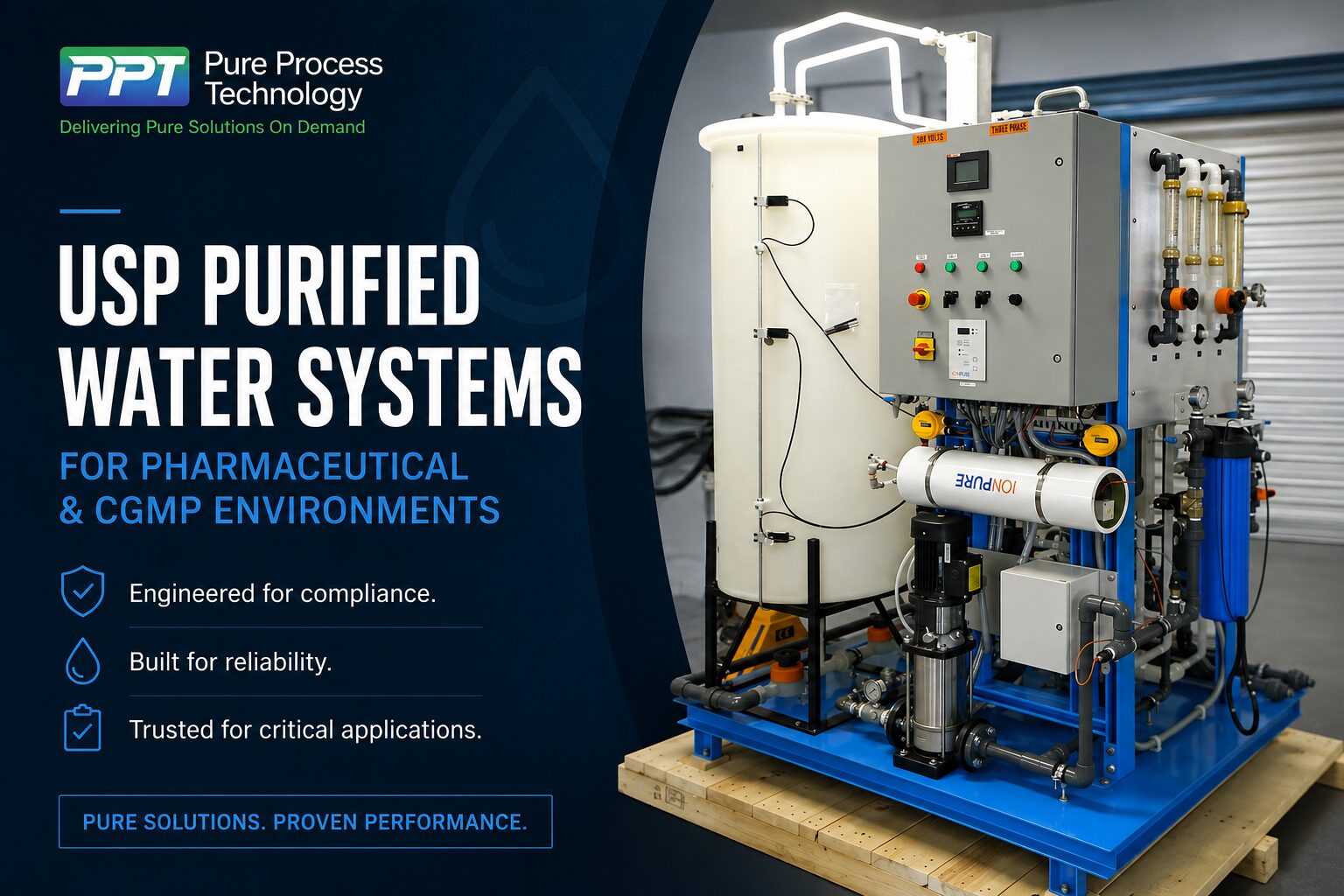
  • USP Purified Water System for Parhmaceutical and cGMP Environments cover graphic

    USP Purified Water Systems for Pharmaceutical and cGMP Environments

    USPPharmaceutical and biotech facilities often need more from a water purification system than simply producing low-conductivity water. The system may also need sanitary construction, controlled distribution, microbial management, monitoring, documentation, qualification support, and a design that fits the facility's cGMP requirements. That is where a USP purified water system differs from a general laboratory RO/DI…

    Read more
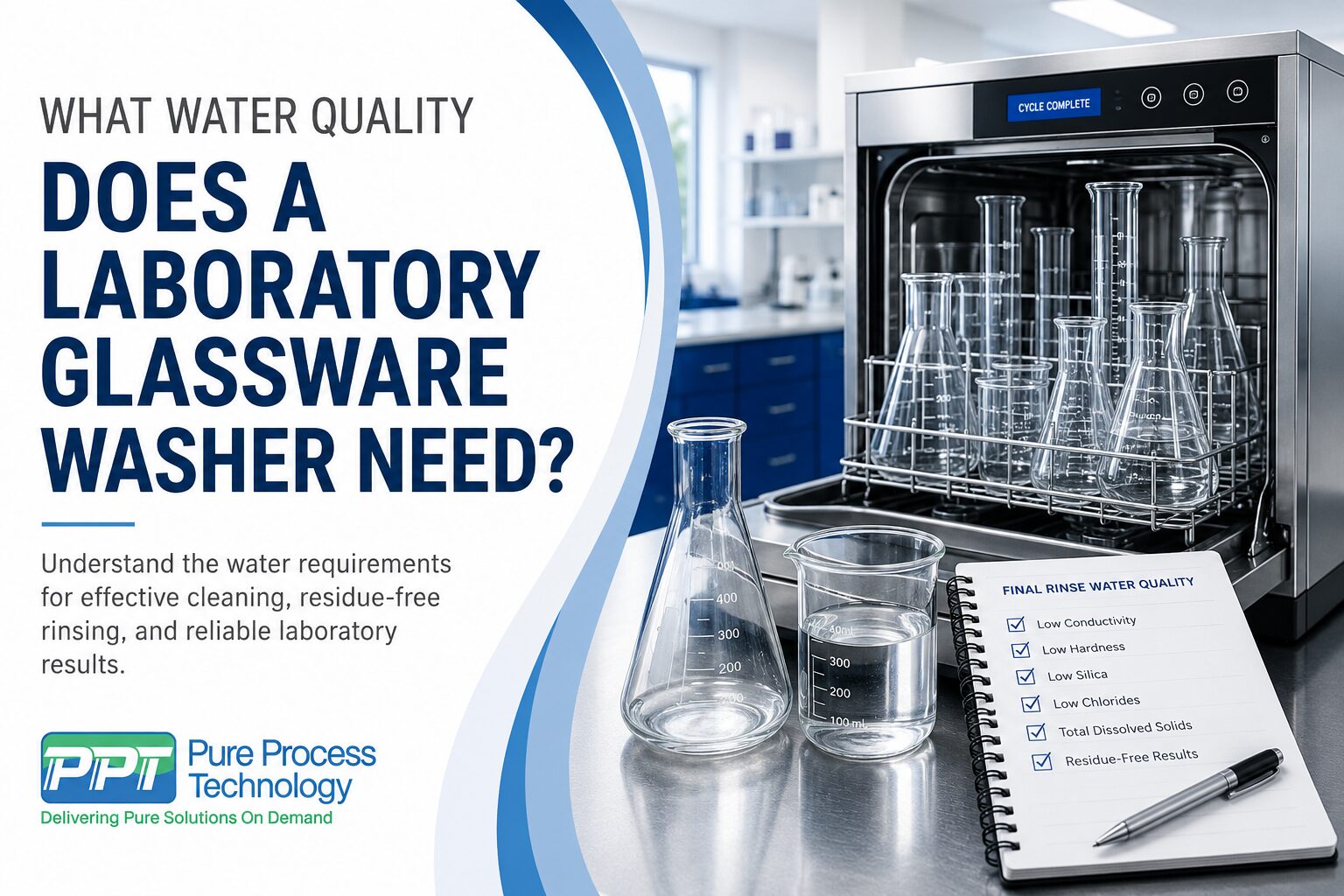
  • Infographic depicting lab glassware washer water quality explanation

    What Water Quality Does a Laboratory Glassware Washer Need?

    Laboratory glassware washers do more than remove visible residue. The cleaning process also needs to leave glassware suitable for the testing, research, production, or preparation that comes next. That makes water quality an important part of washer performance. Tap water may be acceptable for certain wash stages, but dissolved minerals, hardness, salts, silica, and other…

    Read more
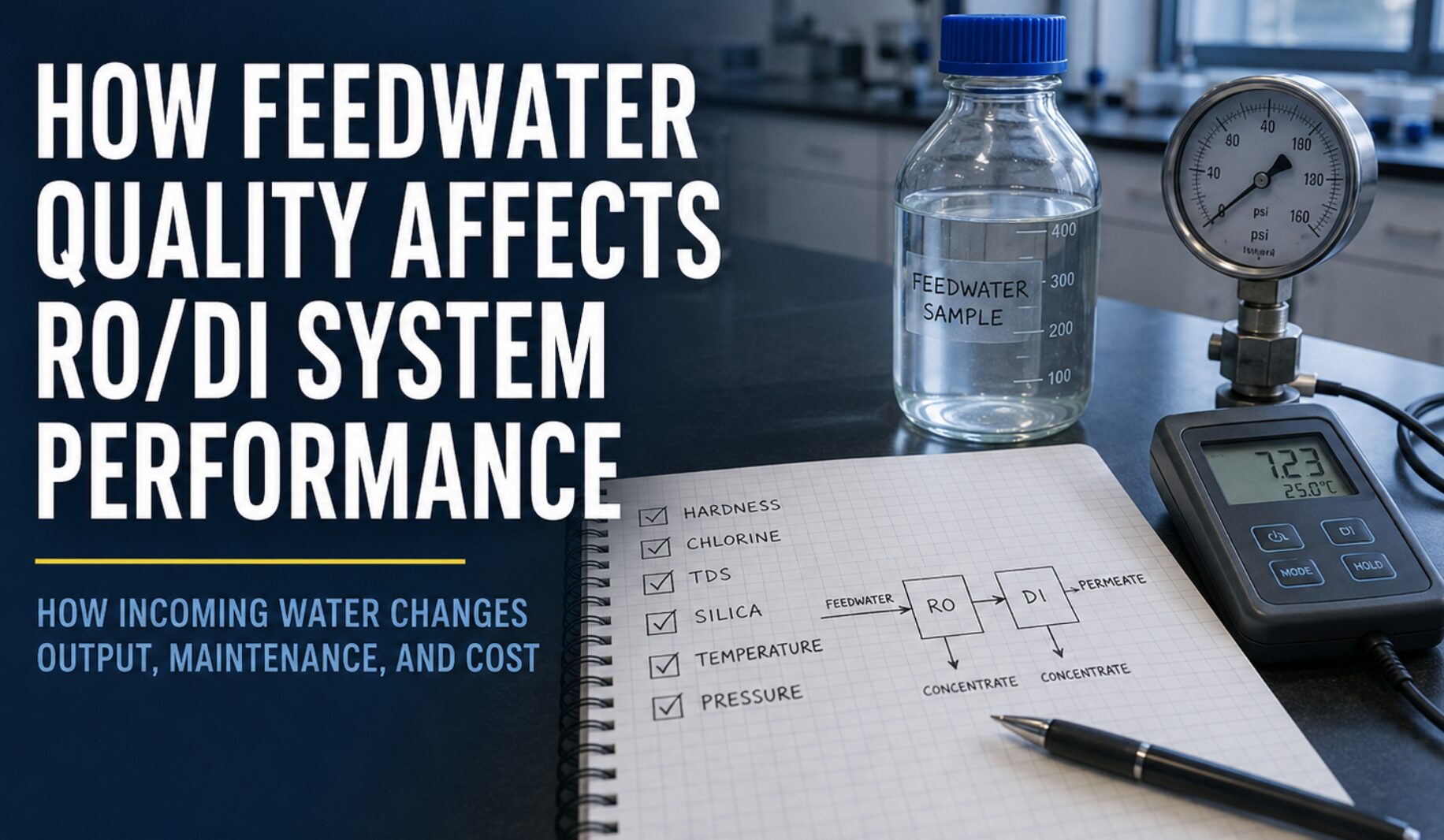
  • How Feedwater Quality Affects RO/DI System Performance Graphic

    How Feedwater Quality Affects RO/DI System Performance

    How Feedwater Quality Affects RO/DI System Performance Two facilities can install similar RO/DI water purification systems and experience very different results. One system may deliver stable water quality, predictable output, and long consumable life. The other may struggle with low production, frequent filter changes, premature membrane failure, high DI resin usage, or inconsistent purity. The…

    Read more
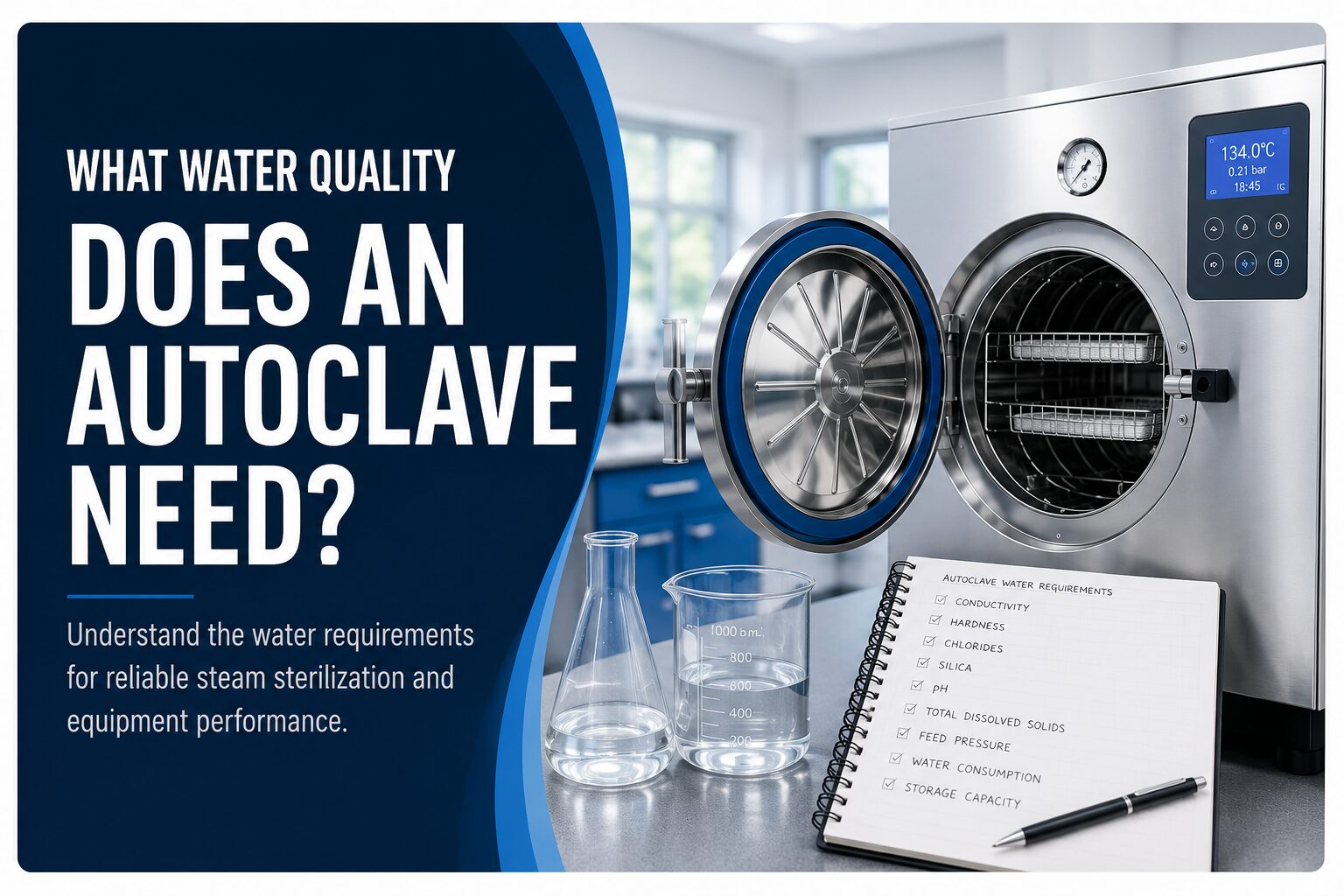
  • Infographic depicting checklist for autoclave water quality

    What Water Quality Does an Autoclave Need?

    Autoclaves depend on water to generate the steam used during sterilization. That makes feedwater quality more than a utility detail. Poor water quality can contribute to mineral buildup, scale, staining, corrosion, clogged components, reduced heat transfer, and added maintenance. Water that is perfectly acceptable for drinking may still contain hardness, chlorides, dissolved minerals, metals, or…

    Read more
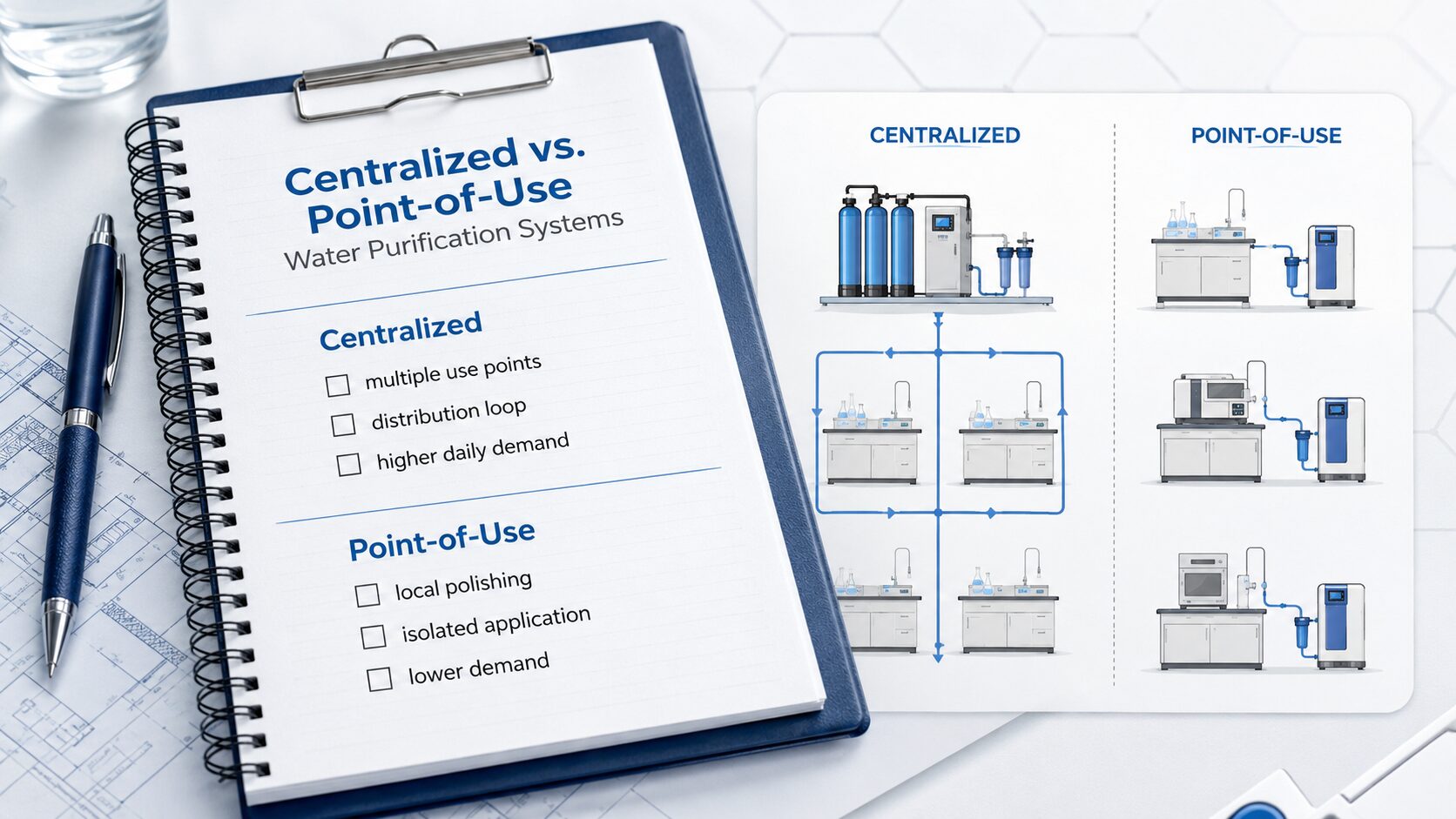
  • infographic depicting a checklist comparing the differences between centralized and point of use water purification systems

    Centralized vs. Point-of-Use Water Purification Systems

    Choosing between a centralized water purification system and point-of-use equipment is one of the biggest early decisions in a laboratory or facility water project. A centralized system produces purified water in one primary location and distributes it to multiple rooms, departments, instruments, or processes. A point-of-use system produces or polishes water close to the application…

    Read more
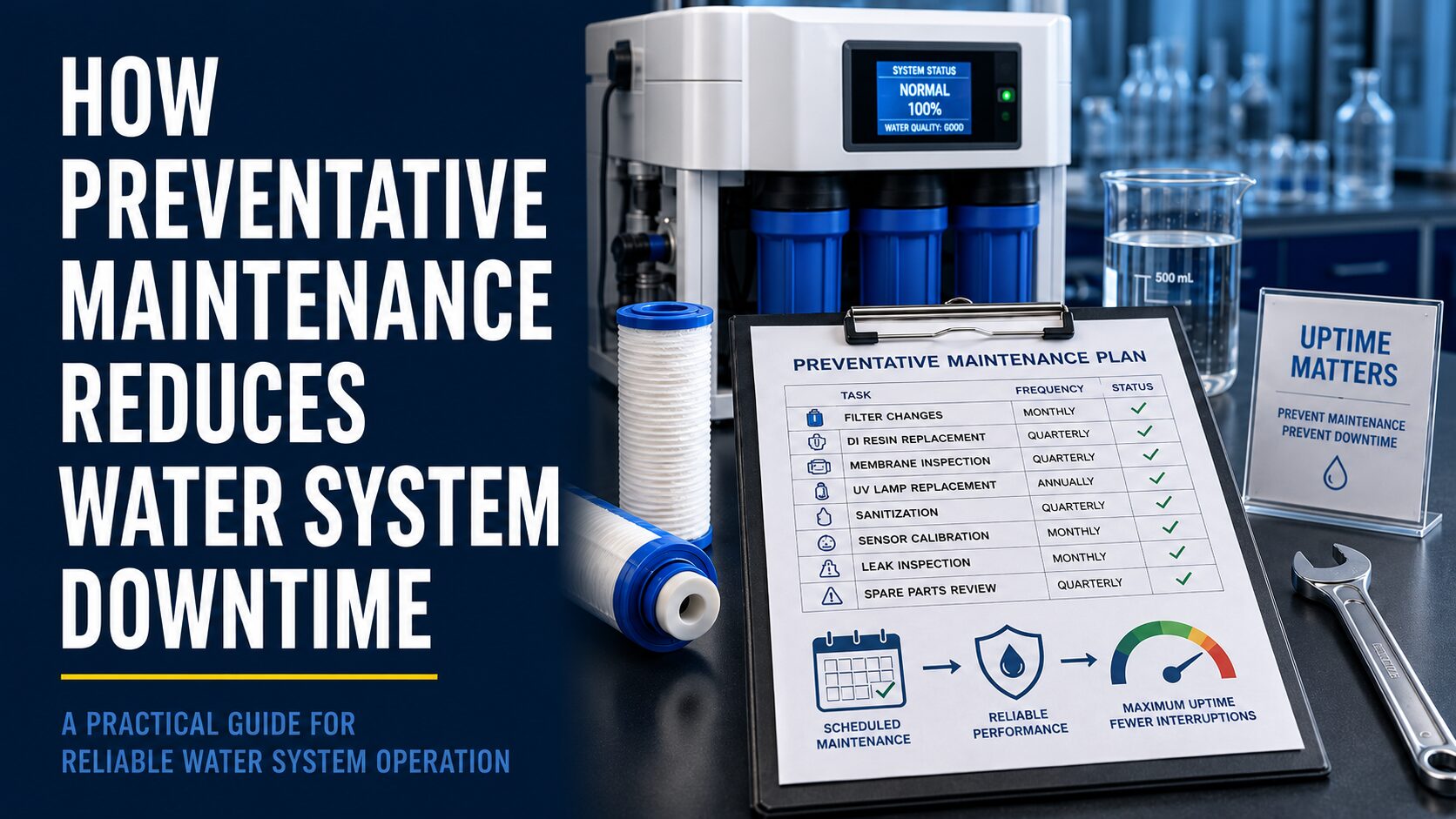
  • Infographic depicting How Preventative Maintenance Reduces Water System Downtime

    How Preventative Maintenance Reduces Water System Downtime

    A water purification system rarely fails all at once. More often, performance starts to slip gradually. Flow rates drop. Filters load faster than expected. Conductivity begins to rise. Pumps run longer. Alarms appear more often. By the time the problem becomes obvious, the system may already be affecting production, testing, cleaning, or other critical operations.…

    Read more
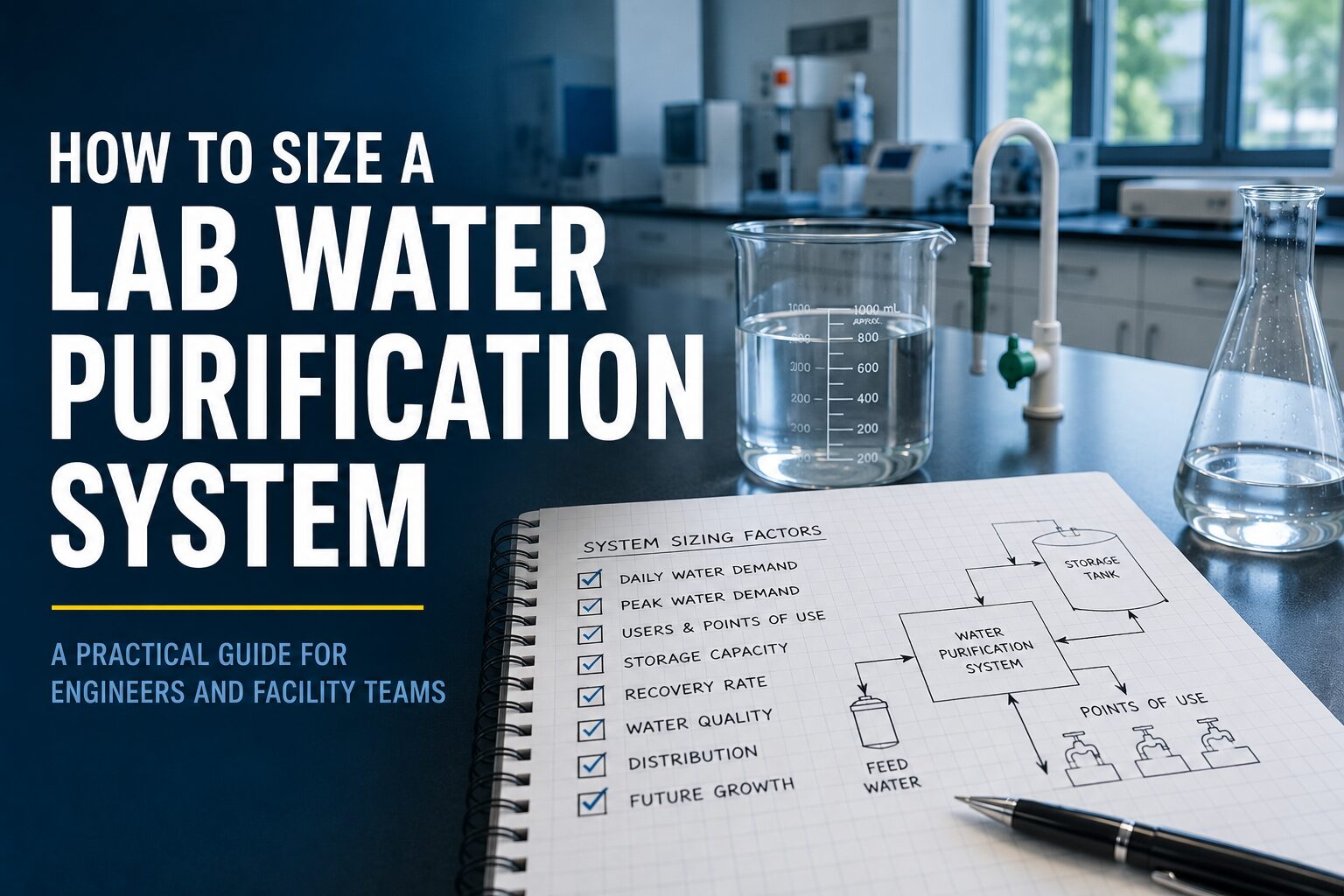
  • How to Size a Lab Water Purification System

    Choosing a lab water purification system is not just a matter of matching a gallon-per-day rating to an estimated total. A properly sized system must produce the required water quality, keep up with normal daily use, support periods of peak demand, and provide enough storage without creating unnecessary cost or complexity. A system can meet…

    Read more
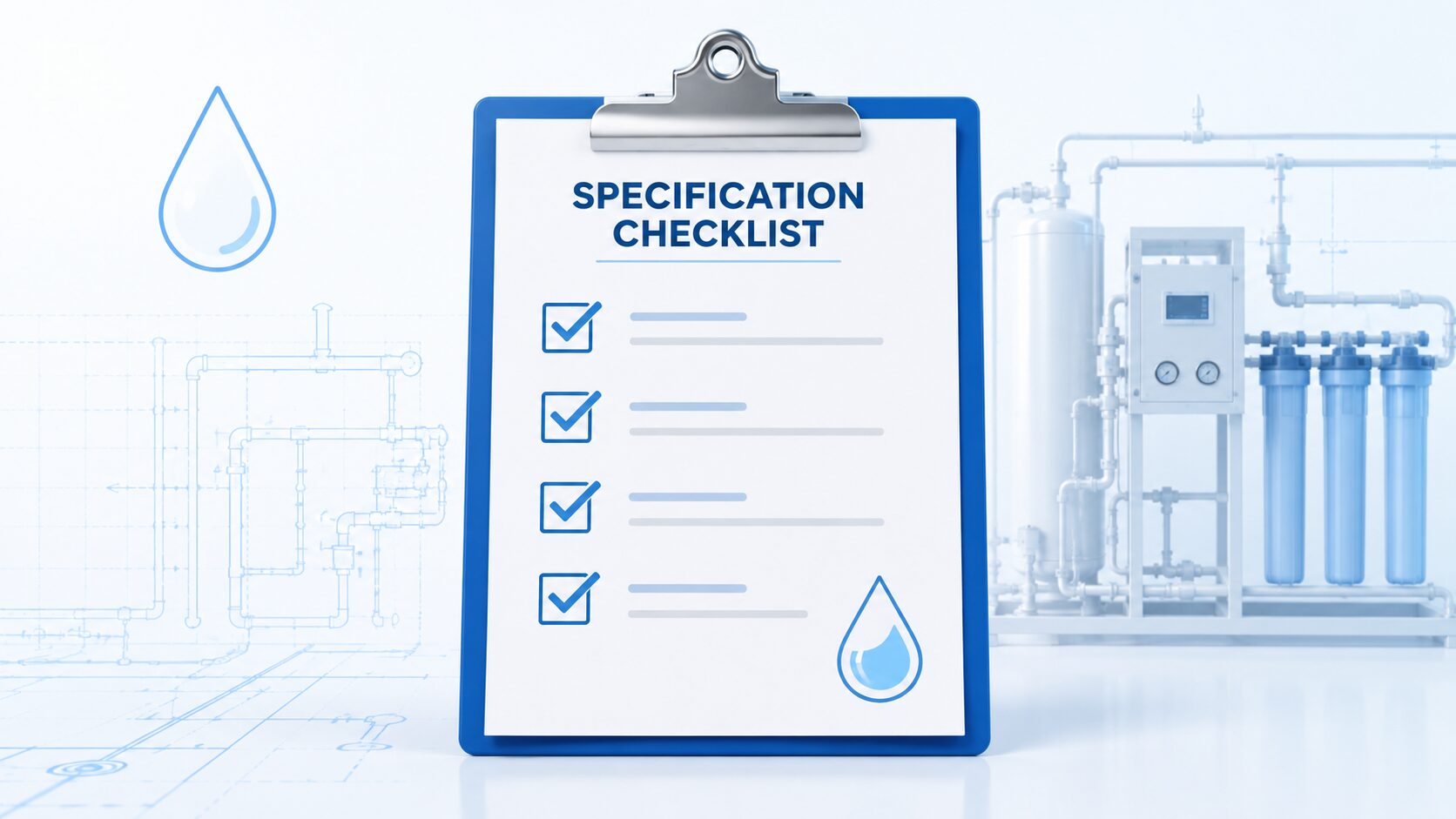
  • graphic depicting a lab water specification checklist for engineers

    Lab Water System Specification Checklist for Engineers

    A practical planning checklist for engineers, contractors, facility teams, and lab planners specifying a laboratory water purification system. Download the Lab Water System Specification Checklist here. Article Contents Specifying a lab water system is not just about choosing a purification unit. A good specification connects the water quality target, daily usage, peak demand, feedwater conditions,…

    Read more
  • graphic explaining lab water purification types

    Type I vs Type II vs Type III Water: What Does Your Lab Actually Need?

    Not every lab needs the same type of purified water. This guide explains the difference between Type I, Type II, and Type III lab water so your team can match water quality to the real application. Article Contents Some applications need ultrapure water for sensitive analytical work. Others need high-purity water for general lab use,…

    Read more
  • Photo containing PPT technician working on electrical panel for water system

    Signs Your Water Purification System Needs Maintenance or an Upgrade

    A lab water purification system can look fine on the outside while performance issues build quietly in the background. Catching problems early helps protect water quality, reduce downtime, and avoid costly emergency service. Here are the most common water system maintenance signs to watch for. 1. Performance Is Dropping If the system is producing less…

    Read more

contact us

Let's talk solutions

Our team’s ready to help you find the right system, answer questions, or get your order started. Reach out today—we’ll get back to you quickly.

By submitting this form, you agree that Pure Process Technology may use your information to respond to your inquiry and communicate with you about relevant products, services, and solutions. Your information will be handled in accordance with our Privacy Policy.